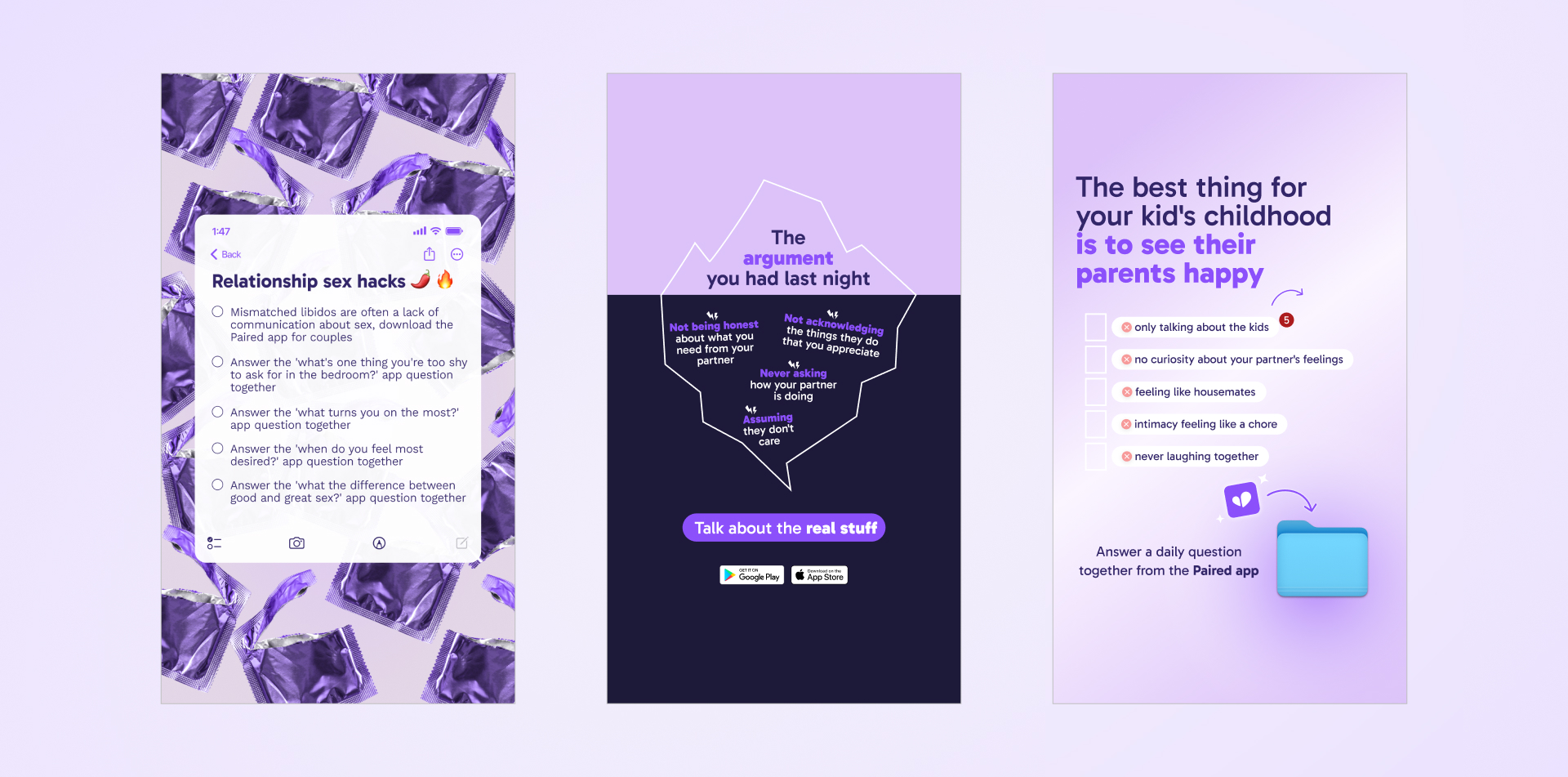
Ad creative overview — static, motion, and UGC-style formats across Meta and TikTok
Paired App helps couples to stay in love through daily questions, games, quizzes and expert-backed tools.
As an in-house designer for 3 years, I've been contributing to the performance marketing team by producing creative assets to test in campaigns — finding the winners that help couples discover the Paired app through paid media.
The main challenge has been balancing brand and organic. Too much brand and the ad feels like an ad; too little and Paired disappears in the feed. Getting that balance right is what drives both recognition and CTR. Since I started, the way of working has been constantly evolving alongside Meta's strategies — from producing at high volume to iterating deeply on concepts with promising results. One of the key learnings has been staying flexible and adapting as the circumstances change.
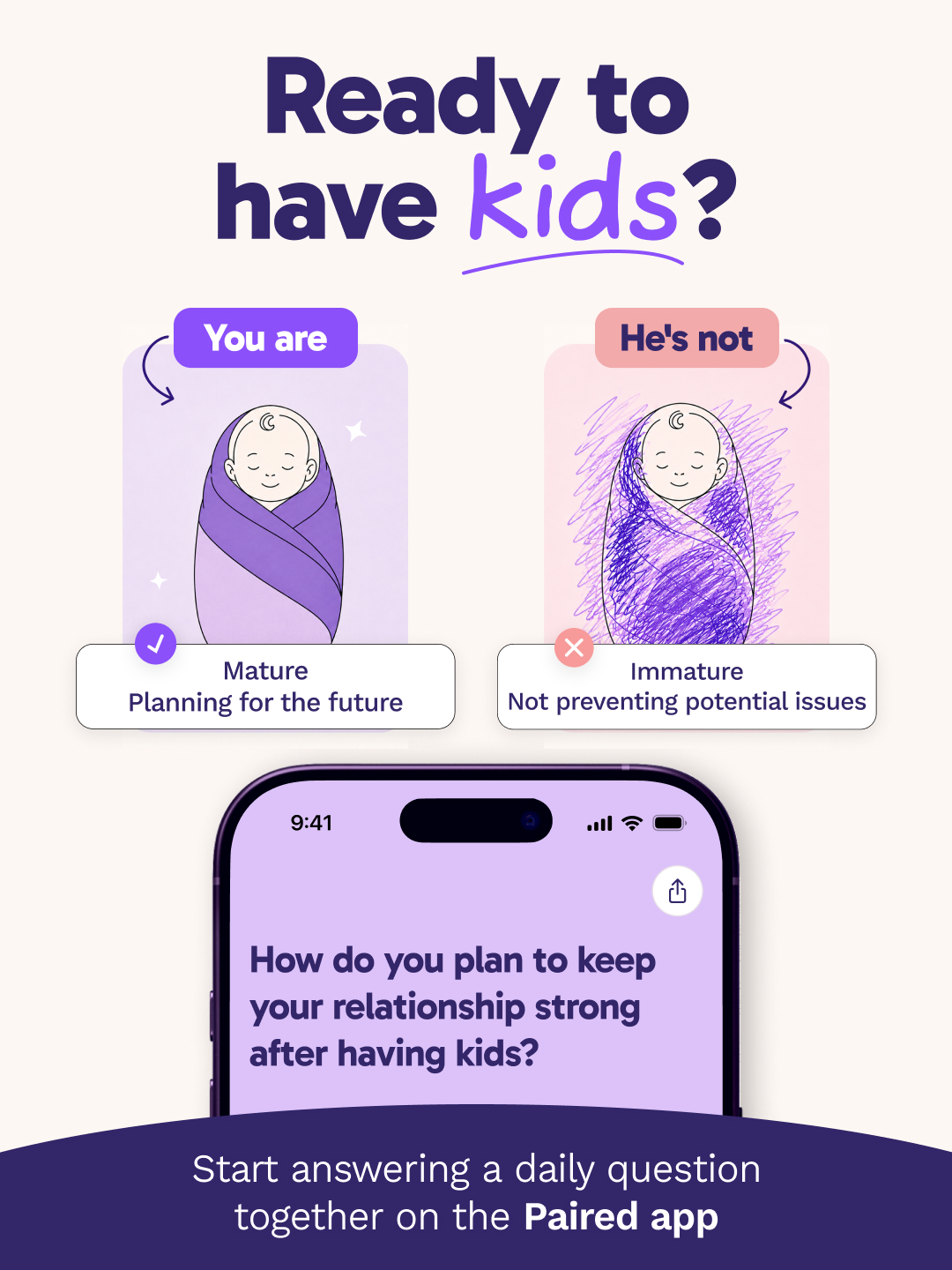
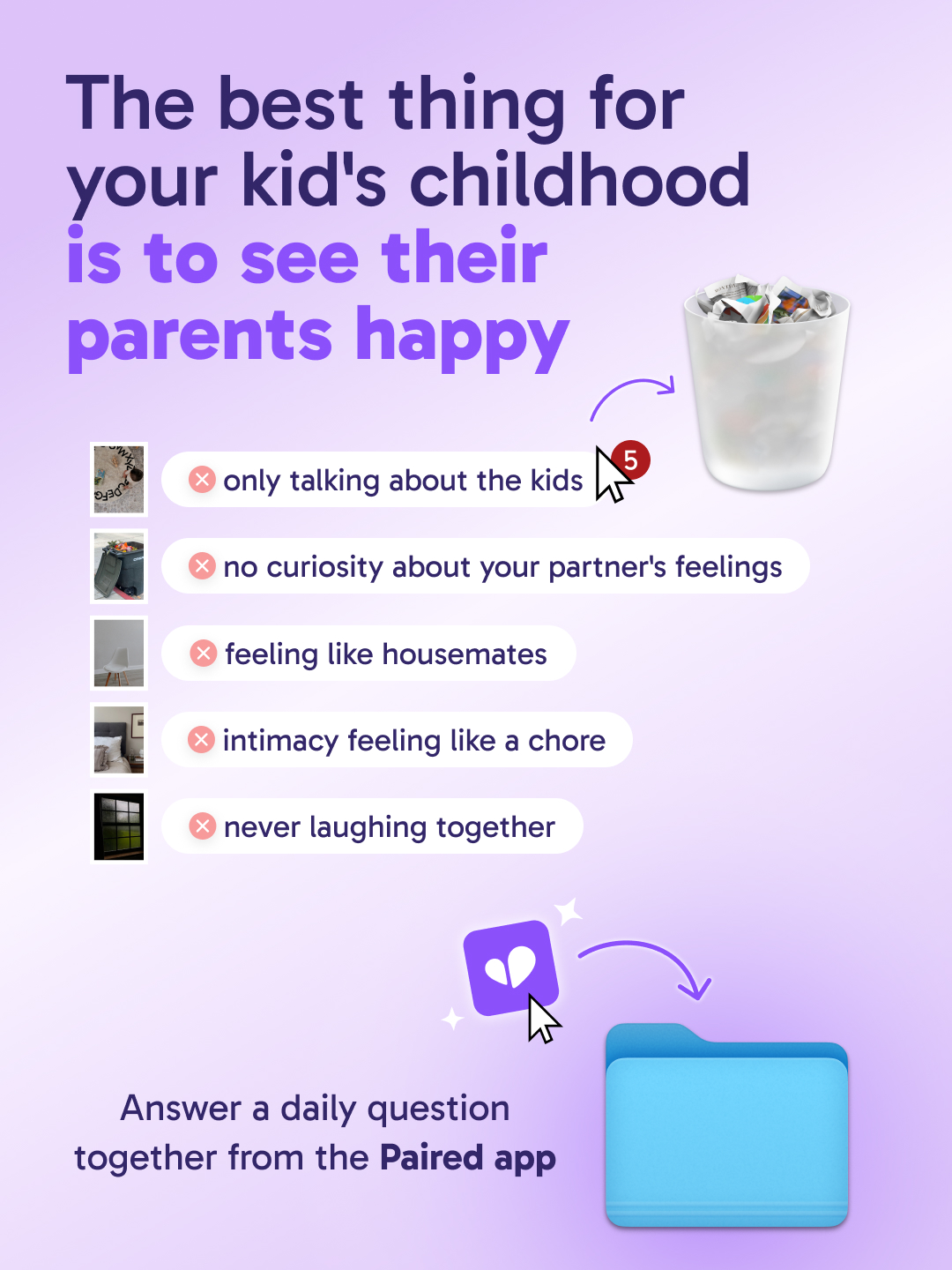
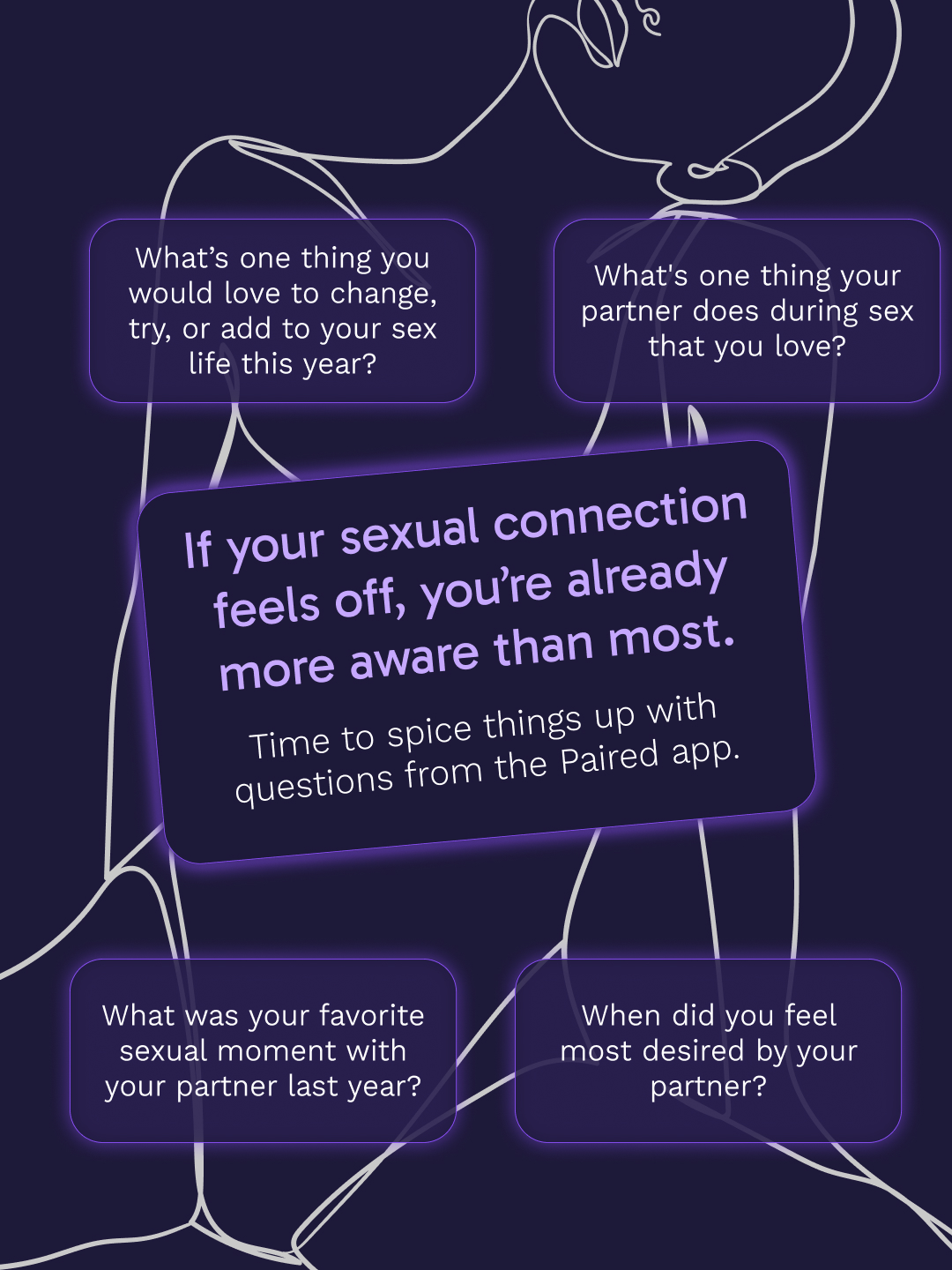
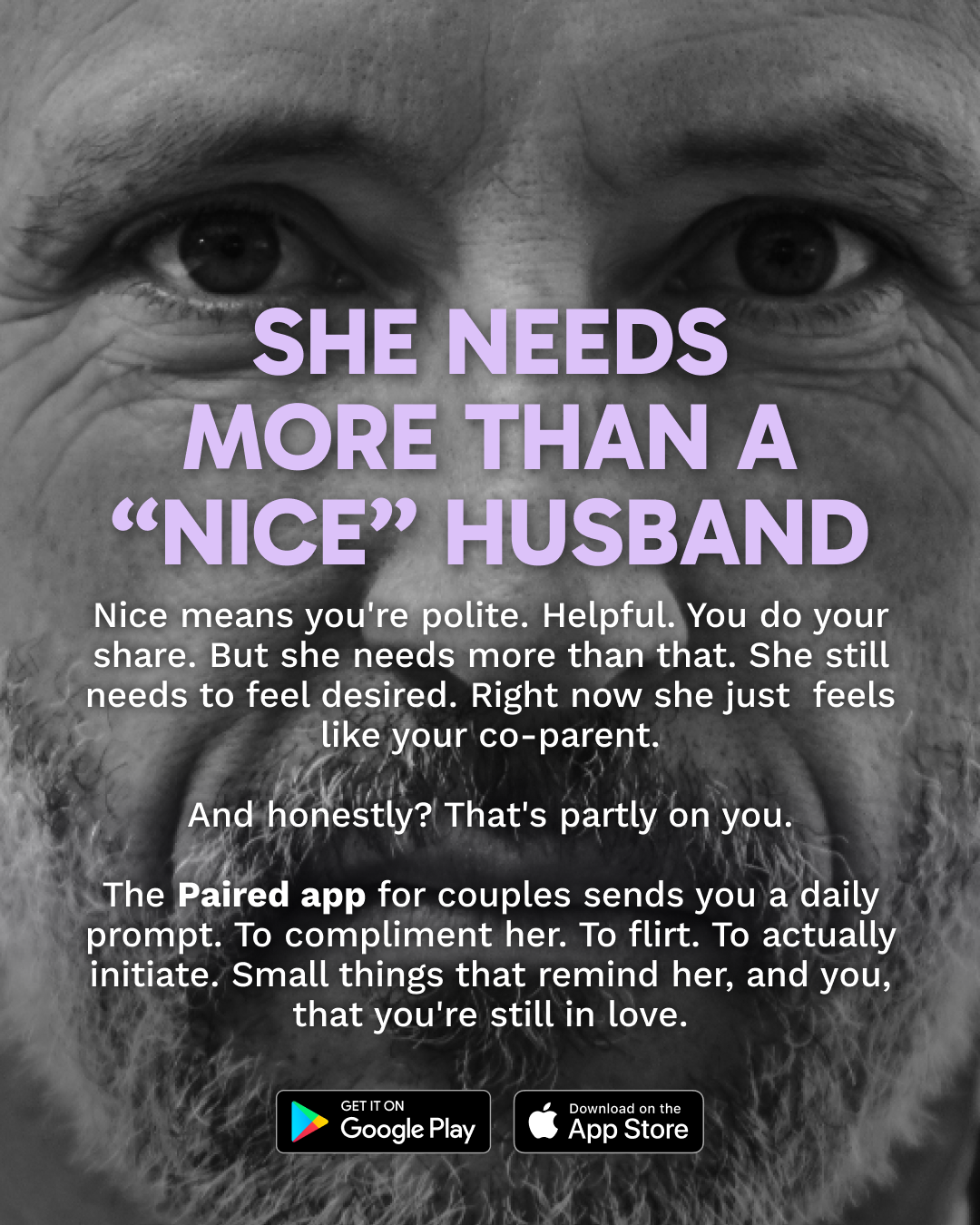
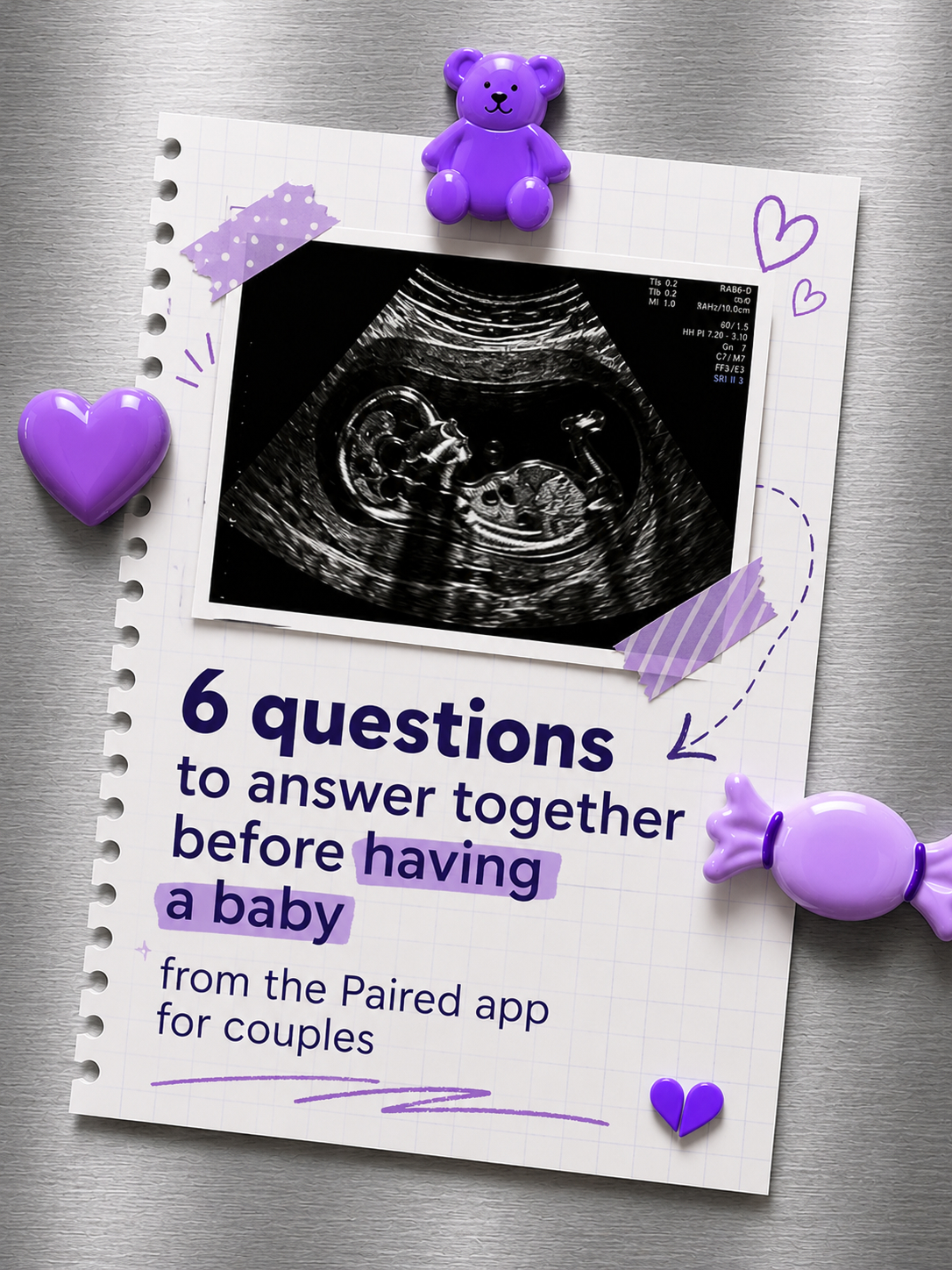
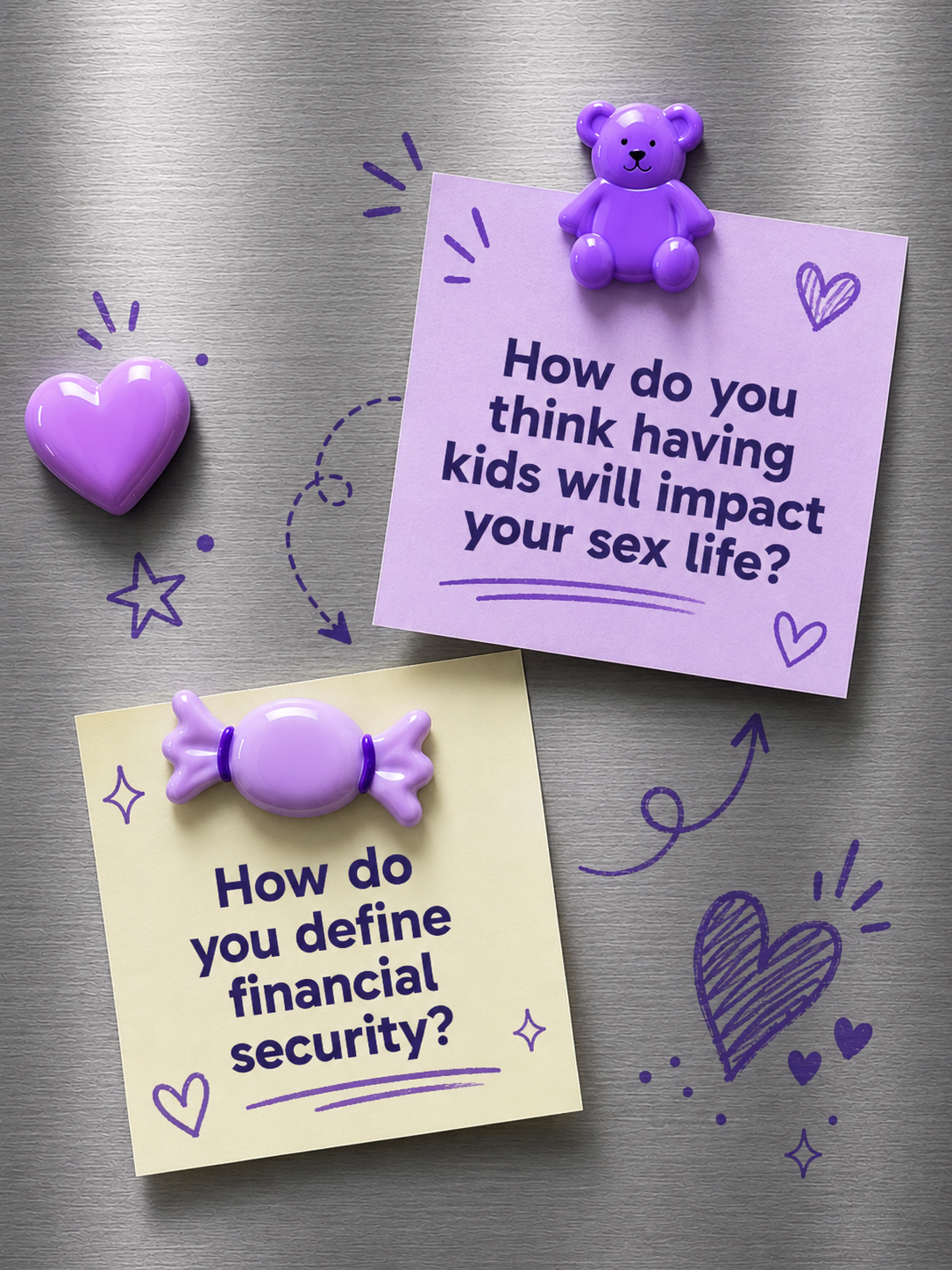
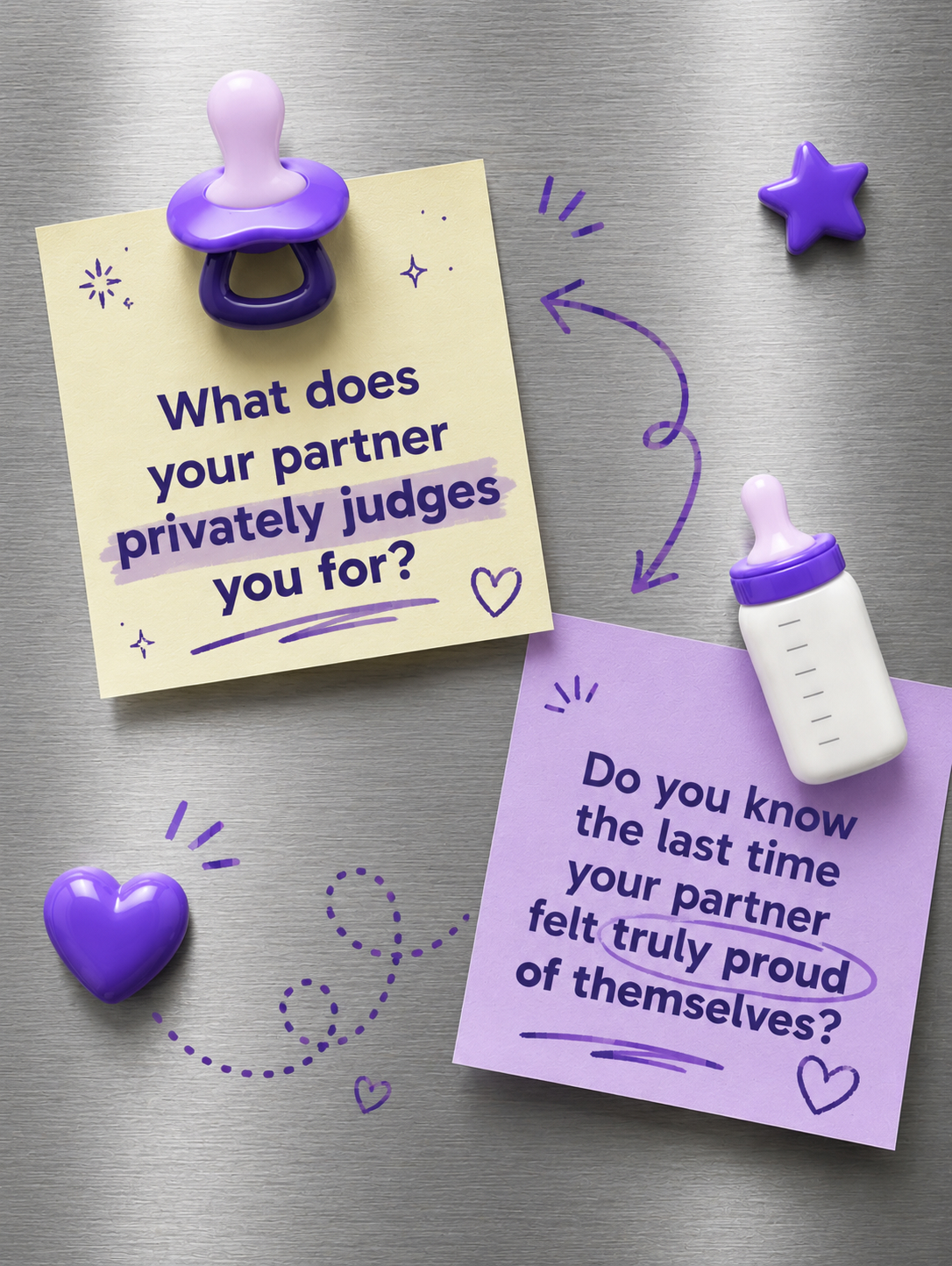
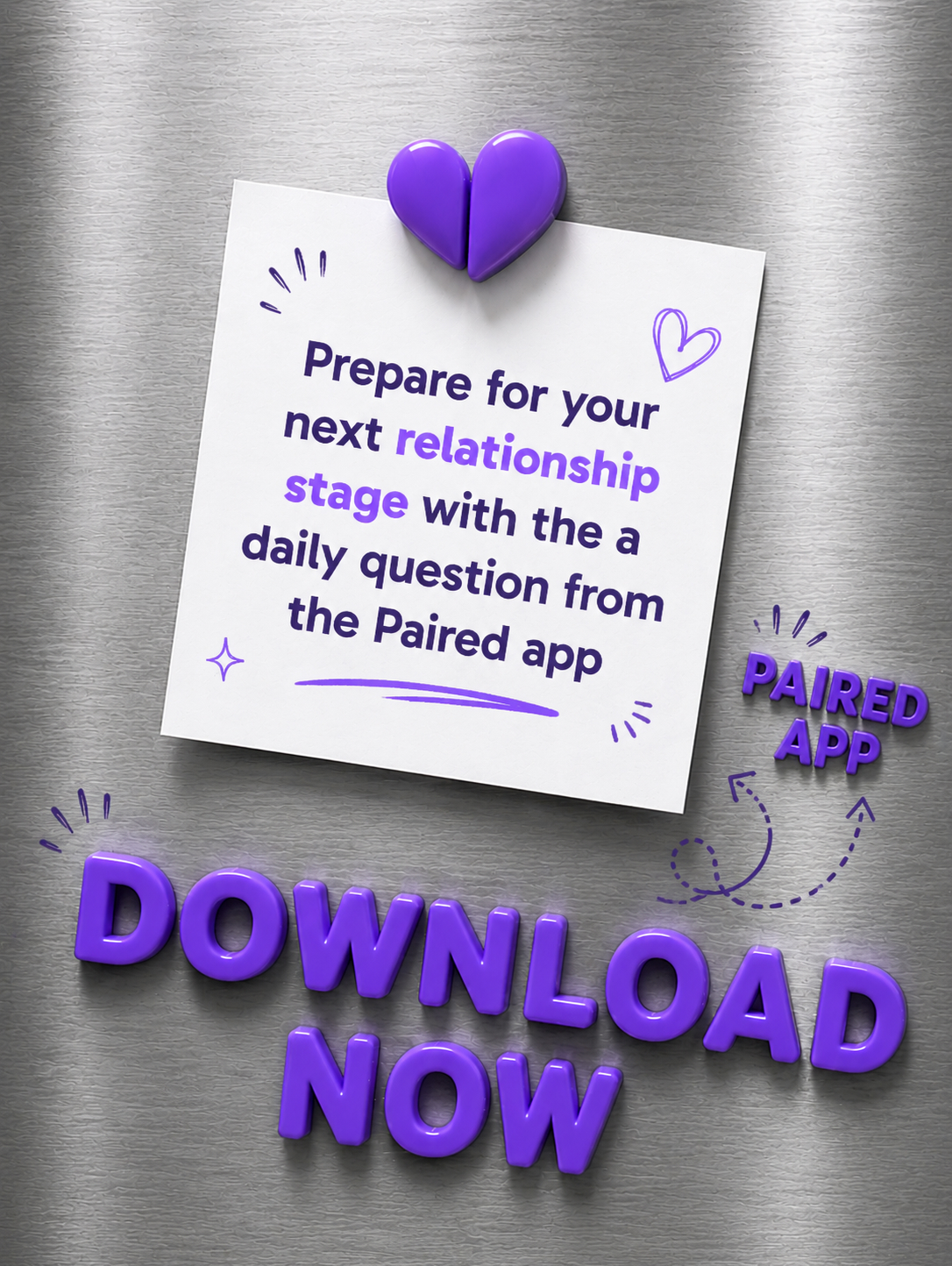
The most scalable format — and the one where A/B testing does its best work. Single images are fast to produce, easy to iterate, and simple to analyse: change one variable, run both, read the result.
The range covers product screenshots, couple photography, quote cards, and feature-led layouts. Each one is designed to communicate Paired's core value — keeping couples close — in a single frame with a clear visual hierarchy.
These run across Meta feed, Google UAC, and Apple Search Ads. The constraint of a static image forces clarity: if the hook doesn't land in under two seconds, the ad doesn't work.
The format that carries users deepest. UGC-style ads feel native to the feed — shot on phone, real couples, no polish. They stop the scroll because they don't look like ads. They don't win on click-through — static beats them there — but they deliver converted trials around 25% cheaper, which is the metric that actually matters for a subscription product.
The key is balance: enough brand presence (Paired UI overlays, colour, app moments) to build recognition, while keeping the organic energy that makes them work. Strip the brand completely and Paired disappears. Over-produce them and the CTR drops.
These are the formats we iterate on most aggressively — testing hooks, opening lines, and UI treatments on top of a winning creative foundation.
Designed ads where the motion does the work — no UGC footage, just timing, transitions, and animation. Text reveals, UI animations, and brand moments choreographed to hold attention through the first three seconds.
More produced than UGC, but designed to still feel native. The goal is creative that reads as content rather than advertising — where the movement feels intentional and rewards watching rather than skipping.
These concepts are built modularly: swappable hooks, interchangeable copy, and reusable animation templates that let the team iterate quickly without rebuilding from scratch each time.
Lessons learned